Building Your Summer BBQ and Entertaining Space
Design an inviting outdoor entertaining area without breaking the bank. We'll walk you through layout planning, choosing the right furniture, and creating an atmosphere that makes people actually want to spend time in your garden.
Why Your Garden Deserves Better Than a Grill and Two Chairs
Summer entertaining doesn't require a massive budget or a designer's eye. What it does need is planning. Too many gardens end up as afterthoughts — a spot where you stand around awkwardly eating burgers. The difference between that and a space people actually enjoy? Intentionality. We're talking about layout, seating that's genuinely comfortable, and the kind of atmosphere that makes guests linger past dessert.
Over the next few sections, we'll break down exactly how to create an outdoor entertaining area that works for your space, your style, and your actual budget. You don't need to hire anyone. Just some honest planning and a clear understanding of what makes outdoor spaces feel inviting.
Important note: The information in this guide is for educational and planning purposes. Building outdoor structures, installing utilities, or making significant garden changes may require permissions or professional advice depending on your location. Always check local building regulations and consider consulting a landscape professional for structural work.
Start With Layout — The Foundation of Everything
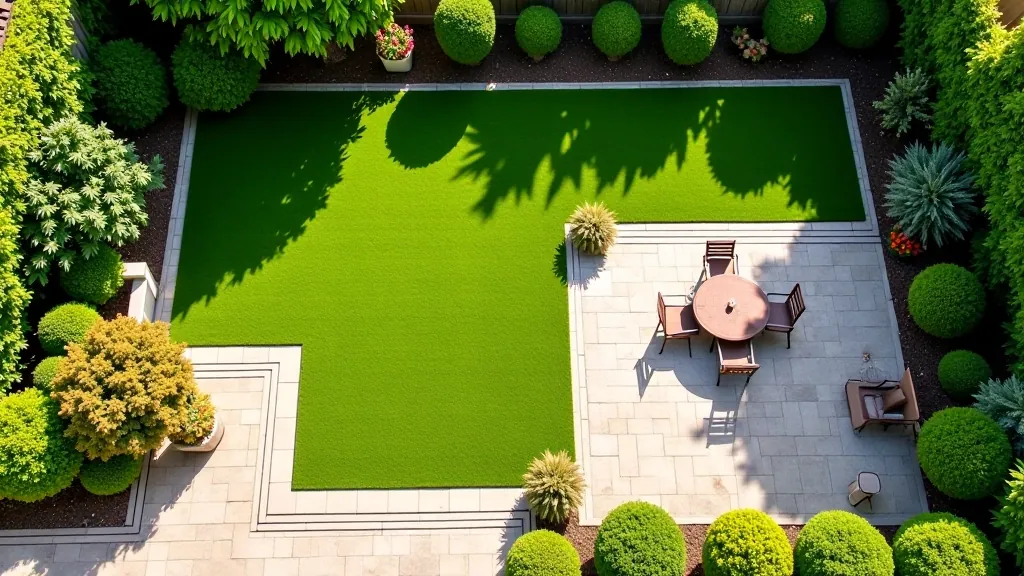
Before you buy anything, understand your space. Measure your garden. Seriously — grab a tape measure and write down the actual dimensions. Most people misjudge space dramatically. A 20ft × 15ft garden feels smaller once you place furniture.
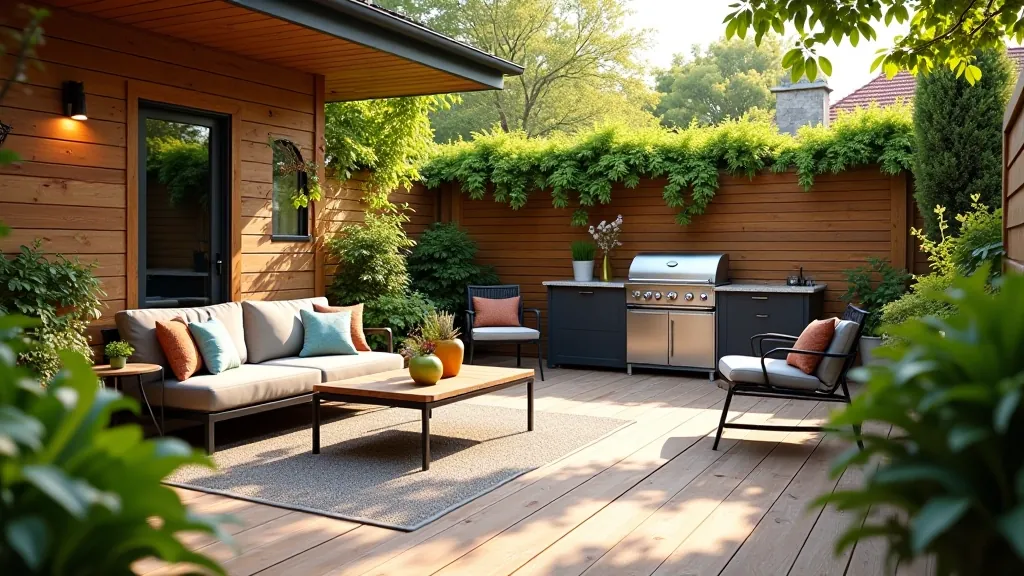
The key principle: separate zones. You need a cooking area, a dining area, and a lounging area. These don't have to be massive, but they should feel distinct. If you put the BBQ right next to where people sit, you're forcing everyone to smell charcoal while eating. Not ideal.
The Three-Zone Formula
- Cooking zone: BBQ, prep table, and access to your kitchen. Minimum 8 × 8 feet if space allows.
- Dining zone: Table seating for your typical gathering size. Plan 2 × 3 feet per person minimum.
- Lounge zone: Comfortable seating, shade, conversation space. This is where people actually relax.
These zones create natural traffic flow. Guests don't feel like they're in your way, and you've got room to move without dodging people while you're cooking. It's the difference between an outdoor space that feels chaotic and one that feels intentional.
Choosing Furniture That Actually Works
Here's where most people get it wrong: they buy cheap plastic furniture and wonder why nobody wants to sit in it. You don't need expensive designer pieces, but you do need pieces that are genuinely comfortable and built to last a season or two without falling apart.
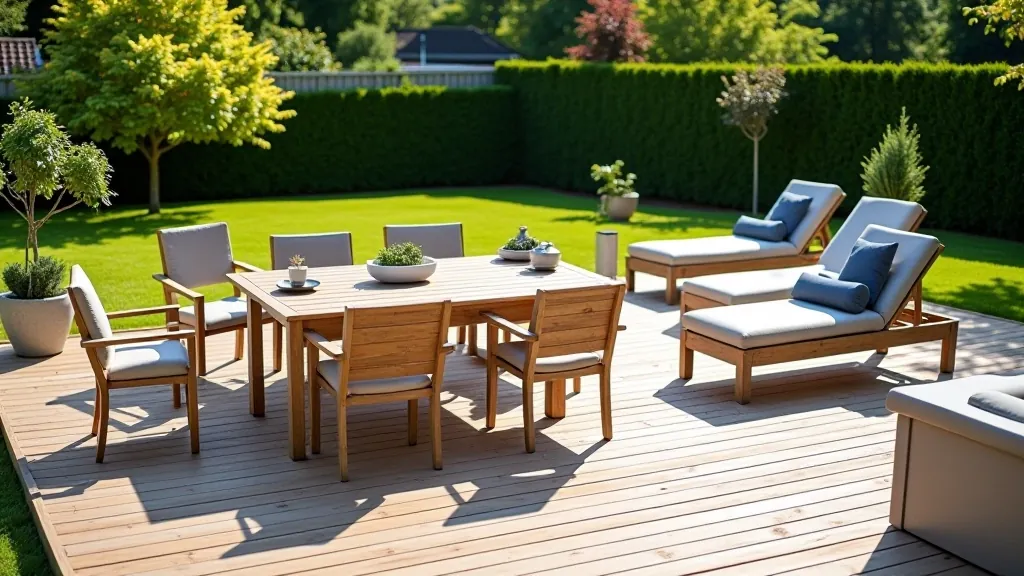
Start with your dining setup. A table that seats six is usually the sweet spot for entertaining. You'll want something solid — teak, metal frames with weather-resistant tops, or treated wood. Avoid anything flimsy. When someone leans on your table or puts their weight on a chair, it needs to feel stable. That confidence matters.
What to Look For
Comfort First
Sit in the chairs before you buy. If it's uncomfortable for 15 minutes, nobody's staying for dinner.
Durability Matters
Weather-resistant fabrics, sealed wood, and stainless steel fittings save you from replacing pieces every year.
Space Efficiency
Choose pieces that fit your actual garden size. Oversized furniture in a small space makes everything feel cramped.
For lounging seating, you're looking at outdoor sofas or individual chairs with good cushioning. Don't skimp here — people judge a space by where they sit. A few quality pieces beat a pile of uncomfortable stuff.
Creating Atmosphere Without Overthinking It
The difference between a garden and an entertaining space? Atmosphere. You're not trying to create a nightclub — just an environment where people feel like they're somewhere special. It's simpler than you think.
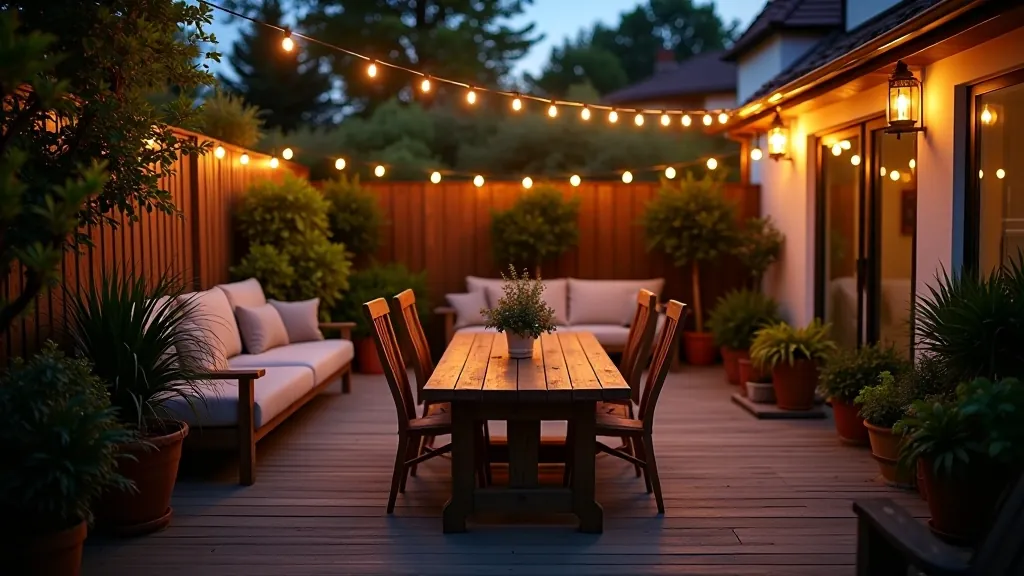
Lighting does about 80% of the work. String lights overhead create instant ambiance. You don't need expensive options — basic café-style strings from any garden centre work brilliantly. Position them above your dining area or lounge zone. Once the sun starts setting, that lighting transforms your space. People automatically relax more in warm, soft light.
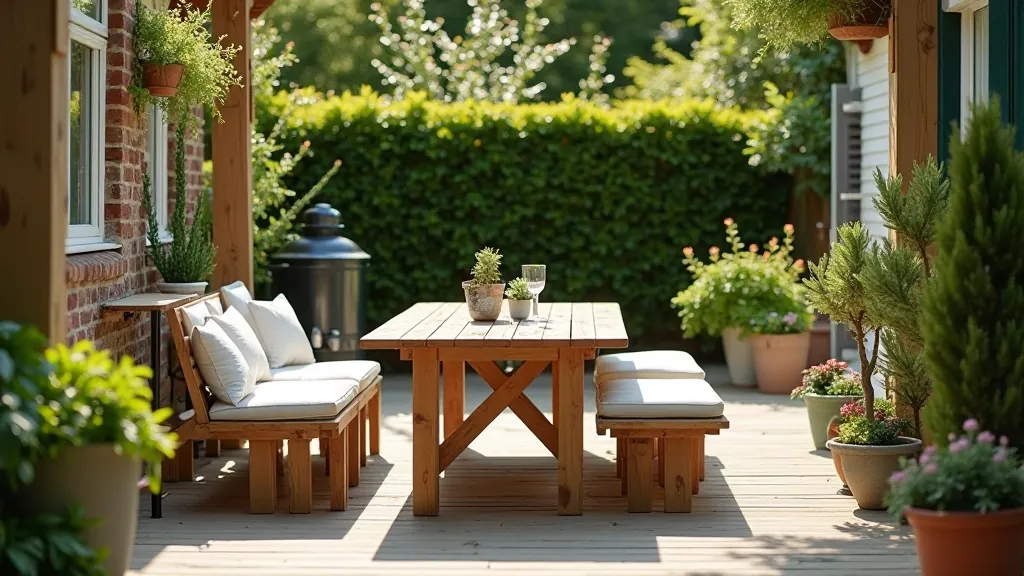
Greenery and planting add life without requiring expertise. Container plants around the perimeter soften hard edges and create natural boundaries between your space and the rest of the garden. Herbs are practical too — rosemary, basil, and mint in pots near the cooking area look good and are actually useful.
Quick Atmosphere Wins
- String lights overhead (warm white, not bright white)
- Container plants: herbs, flowers, small shrubs in corners
- Shade solution: parasol, awning, or natural shade from trees
- Sound control: soft background music keeps conversation flowing
- Weatherproofing: cushion storage box for practicality and neatness
Building This Without Breaking Your Budget
You don't need a five-figure garden makeover. A functional, attractive entertaining space can come together for reasonable money if you're strategic. The key is investing in what people actually use — seating and dining — and being creative with atmosphere.
Buy your table and chairs first. This is where your budget should go. Then add the atmosphere elements gradually. String lights cost about £25-50. Container plants are cheap, especially if you buy smaller specimens and let them grow. A decent parasol runs £60-120 and provides actual value by creating shade.
For the BBQ itself, you don't need a fancy built-in. A decent portable BBQ that sits on a sturdy table works perfectly. Spend maybe £150-300 on something reliable that'll last. Cheap BBQs rust quickly and perform poorly. The mid-range options are where you get real value.
Smart Budget Allocation
Start small. Get the essentials working first, then add refinements. A garden that's genuinely comfortable to sit in beats one that's Instagram-perfect but uncomfortable. People remember how they felt, not how expensive the furniture looked.
Practical Details That Make the Difference
We've covered the big stuff — layout, furniture, and atmosphere. But the practical details separate spaces that work from spaces that frustrate you. You'll notice these things within the first entertaining session.
Access to Kitchen
Your cooking area should have a clear path to your kitchen. You'll be running back and forth for ingredients, plates, and drinks. A direct route matters more than you'd think. Position your BBQ so you're not walking across the entire garden.
Surface for Prep and Serving
You need actual table space for prep and plating. A small side table near the BBQ works, or position a bar-height table where people can grab food as it comes off. This beats setting everything on a tiny ledge.
Shade Coverage
A parasol over the dining area is essential. People won't sit in full sun for two hours eating. A 3 × 3 metre parasol covers a table nicely. If you have trees, even better — natural shade's always superior to artificial solutions.
Waste Management
Keep a discreet bin nearby for rubbish. You don't want people carrying things to the kitchen or leaving plates scattered around. A weatherproof container tucked to the side keeps things tidy without being obvious.
Lighting for Evening
Don't just rely on string lights. Have some overhead lighting or solar ground lights for safety and visibility. You want guests to feel comfortable moving around once it gets dark, not tripping over patio edges.
Storage Solutions
A weatherproof box stores cushions, blankets, and entertaining supplies. This keeps your space looking neat and protects your investment. When people see things neatly stored rather than scattered about, the whole space feels more intentional.
Your Space Is Ready
Building an entertaining space isn't complicated. It's about understanding how people actually use outdoor areas and designing around that reality. Separate zones keep things functional. Good furniture makes people comfortable. Thoughtful atmosphere makes them want to stay. And practical details mean you're not stressed while hosting.
Start with what you've got. Measure your space. Add furniture gradually. Build atmosphere over time. You don't need everything perfect on day one. The best entertaining spaces evolve as you understand what actually works for your garden and your guests. This summer, you'll have a space you're genuinely proud to show off.